
Table of Contents
Introduction
You wrote a blog post. You spent hours on it. But when you search on Google… it’s nowhere to be found. Sounds familiar?
This is one of the most common problems beginners face. The issue is not always your writing — it’s often that you didn’t do keyword research properly.
Simple tareeke se samjhein to… if you don’t know what people are searching for, your content may never reach them.
Agar aap beginner ho to don’t worry. In this guide, we’ll break down keyword research in the simplest way possible — no confusing terms, no expert jargon.
What is Keyword Research
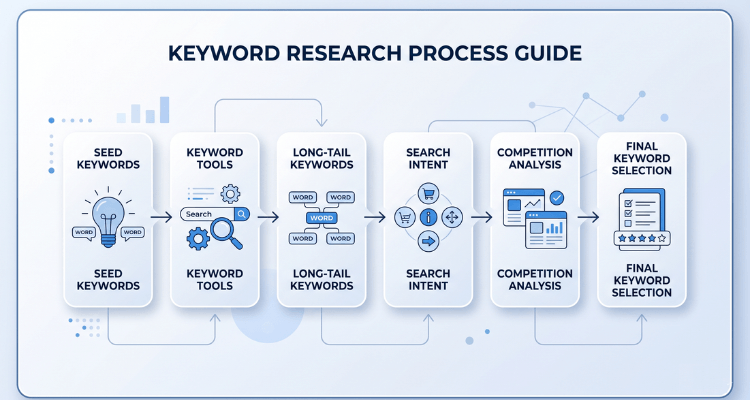
These words or phrases are called keywords.
For example:
- “best shoes for running”
- “how to start a blog”
- “weight loss tips at home”
These are real search queries.
Simple tareeke se samjhein to…
Keyword = what people search
Keyword research = finding those searches
If you create content based on these keywords, your chances of getting traffic increase.
Why Keyword Research is Important

Without keyword research, blogging becomes guesswork.
Here’s why it matters:
Helps You Get Traffic
If people are searching for a topic and you write about it, you can get visitors
Saves Time
You won’t waste time writing content no one is searching for.
Improves SEO Rankings
Search engines understand your content better when you use the right keywords.
Helps Understand Audience
You learn what your audience actually wants.
Agar aap beginner ho to…
Think of keyword research as a map that shows where to go.
Step-by-Step Guide (Very Easy Language)
Let’s break it down into simple steps.
Step 1: Choose a Topic (Niche)
Start with a broad topic.
Examples:
- Fitness
- Blogging
- Technology
- Education
Example: “Blogging”
Step 2: Find Seed Keywords
Seed keywords are basic words related to your topic.
For blogging:
- blog
- blogging
- start a blog
These are your starting points.
Step 3: Use Google for Ideas
Google is your best free tool.
Type your keyword in search bar and notice:
✔ Autocomplete suggestions
✔ “People also ask” section
✔ Related searches at the bottom
Example:
If you type “blogging”, you might see:
- blogging for beginners
- how to start blogging step by step
These are long-tail keywords.
Step 4: Focus on Long-Tail Keywords
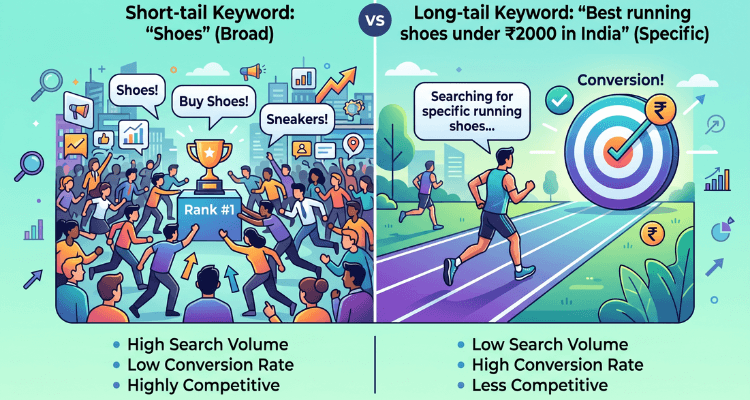
Long-tail keywords are longer and more specific.
Example:
❌ blogging (too broad)
✔ how to start blogging for beginners step by step
Why they are good:
- Less competition
- More targeted traffic
Agar aap beginner ho to… always start with long-tail keywords.
Step 5: Understand Search Intent
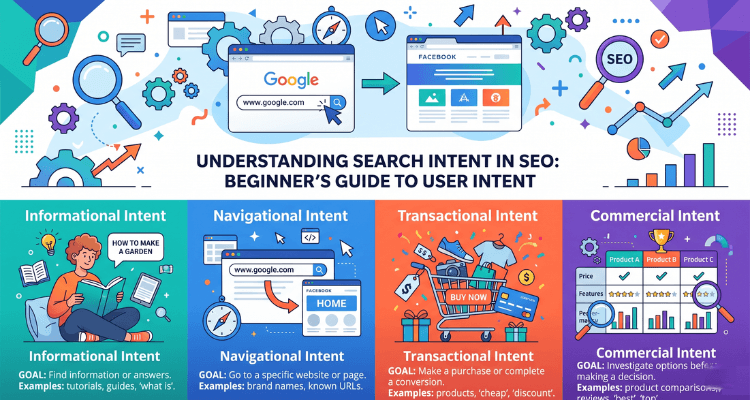
Search intent = what the user wants.
Types of intent:
- Informational (learn something)
- Transactional (buy something)
- Navigational (find a website)
Example:
- “how to write a blog” → informational
- “buy laptop online” → transactional
Your content must match the intent.
Step 6: Check Competition Level
Some keywords are very competitive.
As a beginner:
- Avoid high competition keywords
- Choose low or medium competition
This increases your chances of ranking.
Step 7: Use Keywords Naturally in Content
Place your main keyword in:
✔ Title
✔ Headings
✔ First paragraph
Also use related keywords (LSI keywords) like:
- SEO keywords
- search volume
- keyword ideas
- organic traffic
Important: Don’t overuse keywords. Keep it natural.
Practical Tips (Beginner-Friendly)
Here are some simple tips you can follow:
✔ Start with low competition keywords
✔ Use 1 main keyword + 3–5 related keywords
✔ Always think like a user
✔ Answer real questions people ask
✔ Keep your content simple and helpful Simple tareeke se samjhein to…
Write for humans first, then optimize for search engines
Common Mistakes Beginners Make
Avoid these mistakes:
❌ Choosing very competitive keywords
❌ Ignoring search intent
❌ Writing without research
❌ Keyword stuffing
❌ Copying others’ content
Agar aap beginner ho to…
Focus on learning, not perfection.
FAQs
Keyword research is the process of finding what people search online so you can create relevant content
Start with a basic topic, use Google suggestions, and find long-tail keywords.
These are longer, more specific search phrases with lower competition.
Use 1 main keyword and a few related keywords naturally.
Yes. Google search, autocomplete, and related searches are enough to start.
It means overusing keywords unnaturally, which can harm your ranking.
Conclusion
Keyword research may feel confusing at first, but once you practice it, things become much easier.
Agar aap beginner ho to… start small. Pick a topic, find keywords, and create helpful content.
You don’t need to be perfect. You just need to start.
Take action today:
Choose one topic, do basic keyword research, and write your first SEO-friendly blog post.
Consistency will bring results 🚀