
Many beginners want to start a blog, but they stop because the first few steps feel confusing. They don’t know which topic to choose, where to create the blog, what to write first, or how blogging can grow slowly over time.
If you are also feeling the same, don’t worry. Blogging becomes easier when you follow a simple path instead of trying to learn everything in one day.
In this guide, we will keep things practical. You will understand how to choose a blog topic, set up your blog, write helpful posts, use basic SEO, and avoid the mistakes that usually confuse new bloggers.
Blogging is not a shortcut to fast income. But if you build it with useful content, patience, and consistency, it can help you create trust, skills, audience, and income opportunities in the future.
So chaliye, step by step samajhte hain how to start blogging in a simple and practical way.
Table of Contents
What Is Blogging?
Blogging means creating and publishing useful articles on a website. These articles can explain a topic, solve a problem, share experience, teach a skill, or guide readers step by step.
For example, if someone searches “how to start blogging” and your article helps them understand the full process, that article becomes a blog post.
A blog is not just an online diary now. Today, blogs are used for learning, personal branding, business growth, affiliate marketing, service promotion, and building a trusted audience.
But one thing is important: a good blog should not be written only for Google. It should first help real readers. When your content solves real problems, SEO becomes more meaningful.
Is Blogging Still Worth Starting?
Yes, blogging is still worth starting, but the way people build blogs has changed.
Earlier, many bloggers focused only on writing many posts and adding keywords. Now, readers and search engines both expect better quality. Your blog should be helpful, clear, original, and trustworthy.
Blogging can help you in many ways:
- You can build a useful skill.
- You can share knowledge with beginners.
- You can create an online presence.
- You can promote services in the future.
- You can build an email list or community.
- You can earn through ads, affiliate marketing, services, or digital products later.
But blogging is not a quick earning method. Agar aap sirf fast money ke liye blog start kar rahe ho, to frustration ho sakti hai. Blogging works better when you treat it like a long-term skill and content business.
So, blogging is worth starting if you are ready to learn, write helpful content, improve slowly, and stay consistent.
How to Start Blogging Step by Step
Starting a blog becomes easier when you follow a clear process. You do not need to learn everything on the first day. First, choose the right topic, understand your readers, set up your blog properly, and then start writing helpful content.
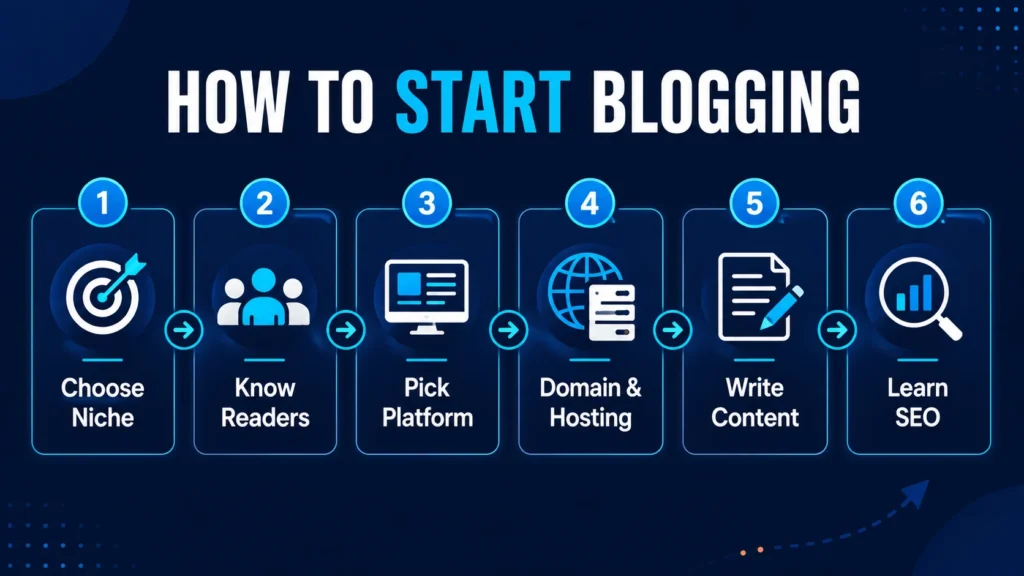
Below is a simple step-by-step process that beginners can follow to start blogging with more clarity and less confusion.
Step 1: Choose a Clear Blogging Niche
A blogging niche means the main topic of your blog. For example, SEO, WordPress, personal finance, cooking, fitness, parenting, travel, or digital marketing can be blogging niches.
As a beginner, do not choose a niche only because it looks profitable. First check three things:
- Do you have interest in this topic?
- Are people searching for this topic?
- Can this topic help readers solve real problems?
A good niche should have both demand and usefulness. If you choose a topic only for money, you may lose interest quickly. If you choose a topic only for passion but nobody searches for it, getting traffic can become difficult.
A simple way to choose a niche is this:
Interest + Search Demand + Problem-Solving Value + Monetization Possibility
For example, “blogging for beginners” is a better niche than only “my thoughts” because beginners have clear problems: niche selection, WordPress setup, SEO, content writing, traffic, and earning confusion.
Before finalizing your niche, write at least 20 blog post ideas. If you cannot think of 20 useful topics, the niche may be too narrow or unclear.
Before starting your blog, you can also read this guide to choose a profitable blogging niche with more clarity.
Step 2: Understand Your Target Readers
After choosing a niche, the next step is to understand your target readers. This is where many beginners make a mistake. They start writing without knowing who they are writing for.
Your target reader is the person you want to help through your blog.
For example, DigitalBhai is mainly for beginners who want to learn blogging, SEO, WordPress, AI tools, and online earning in a simple way.
When you understand your readers, your content becomes more useful. You know what questions they have, what mistakes they make, and what type of guidance they need.
Ask yourself these simple questions:
- Who will read this blog?
- What problem are they facing?
- What level are they at — beginner, intermediate, or advanced?
- What result do they want?
- What simple next step can I give them?
A blog grows faster when the reader feels, “Yes, this article is written for me.”
Step 3: Choose the Right Blogging Platform
A blogging platform is the place where you create and manage your blog. There are many platforms available, but for serious blogging, WordPress is one of the most popular choices.
Here, we are talking about self-hosted WordPress, not just a free blogging account.
WordPress gives you more control over your website, design, SEO, plugins, categories, pages, and future monetization options. This is useful if you want to build a long-term blog.
As a beginner, you may feel WordPress is technical in the beginning. But once you understand the basic dashboard, posts, pages, themes, plugins, and settings, it becomes easier.
You can start with a simple setup. Do not install too many plugins or use heavy designs in the beginning. A clean, fast, and easy-to-read blog is better than a fancy but confusing website.
If your goal is serious blogging, WordPress with reliable hosting is a better long-term option.
Step 4: Pick a Simple Domain Name
A domain name is your blog’s online address. For example, yourblogname.com or yourblogname.in can be a domain name.
As a beginner, choose a domain name that is short, simple, easy to remember, and easy to type. Do not make it too long or confusing.
A good domain name should be:
- Easy to pronounce
- Easy to spell
- Related to your niche or brand
- Not too similar to another website
- Simple enough for people to remember
For example, if your blog is about blogging, SEO, and digital marketing, choose a name that sounds clear and professional. Avoid names with too many numbers, hyphens, or random words.
Also, don’t spend too much time searching for a “perfect” name. A good and clear domain is enough. Your content, consistency, and trust will make the brand stronger over time.
Step 5: Choose Reliable Web Hosting
Web hosting is the place where your blog files, images, and content are stored. Without hosting, your website cannot stay live on the internet.
For a beginner, hosting should be simple, fast enough, secure, and easy to manage. You do not need the most expensive hosting plan in the beginning, but you should avoid very poor-quality hosting because it can affect speed, uptime, and user experience.
When choosing hosting, check these basic things:
- Good speed
- Easy WordPress installation
- SSL certificate
- Basic security
- Customer support
- Backup option
- Simple dashboard
In the beginning, choose a plan that fits your budget. Later, when your blog grows, you can upgrade.
Important point: hosting is not magic. Good hosting helps your website run smoothly, but your blog growth still depends on useful content, SEO, and consistency.
Step 6: Set Up WordPress and Basic Blog Pages
After buying a domain and hosting, the next step is to set up WordPress. WordPress is where you will write posts, create pages, manage design, install plugins, and control your blog.
Start with a clean and simple setup. Do not make your blog heavy with too many plugins, animations, or complicated designs.
In the beginning, create these basic pages:
- Home
- About
- Contact
- Privacy Policy
- Disclaimer
- Blog
These pages help your website look more complete and trustworthy. For example, the About page tells readers who you are and what your blog is about. The Contact page helps people reach you. Privacy Policy and Disclaimer pages are also important for a professional website.
After this, choose a lightweight theme, set your menu properly, install only necessary plugins, and keep your design clean. A simple blog that loads fast and helps readers is better than a beautiful blog that confuses people.
For a complete setup process, you can follow this WordPress setup guide for beginners.
Step 7: Plan Your First Blog Topics
After setting up your blog, do not start writing random posts. First, plan your first few blog topics properly.
A good blog topic should be connected to your niche and should solve a real reader problem. For example, if your blog is about blogging, your first topics can be about niche selection, WordPress setup, SEO basics, keyword research, common blogging mistakes, and monetization.
Start with simple beginner-level topics because your first readers may also be beginners. Try to answer questions they are already searching for.
You can use free tools like Google Search, Google Trends, Google Keyword Planner, Google Search Console, and free keyword tools to find topic ideas.
A simple method is to make a list of 20–30 topic ideas before writing. Then divide them into groups like:
- Beginner guides
- Step-by-step tutorials
- Mistakes and solutions
- Tool guides
- Earning and monetization topics
This helps you build a clear content plan instead of writing one post today and getting confused tomorrow. To find better topics, you can also learn the basics of keyword research for beginners
Step 8: Write Helpful Blog Posts
Writing a blog post is not just about filling words. A good blog post should help the reader understand something clearly or take the next step with confidence.
Before writing, ask yourself: “What should the reader learn after reading this post?”
Start with a clear introduction. Then explain the topic step by step. Use short paragraphs, simple examples, headings, bullet points, and FAQs where needed.
For beginners, readability is very important. If your article looks too heavy, readers may leave even if the information is useful.
A helpful blog post usually includes:
- A clear title
- Simple introduction
- Proper headings
- Practical steps
- Real examples
- Common mistakes
- FAQs
- Clear conclusion
- Next step or CTA
Also, avoid writing only for search engines. Write for real people first. Google ka kaam baad me aata hai; pehle reader ko value milni chahiye.
Step 9: Learn Basic SEO
SEO means Search Engine Optimization. In simple words, SEO helps search engines understand your content and show it to the right people.
As a beginner, you do not need to learn advanced SEO on the first day. Start with the basics.
Focus on these simple SEO points:
- Choose one main keyword for the post
- Use the keyword naturally in the title, intro, headings, and content
- Write a clear meta title and meta description
- Add internal links to related posts
- Use proper image alt text
- Keep your URL short and readable
- Make your content useful and easy to read
SEO is not only about keywords. It is also about helping the reader. If your post answers the reader’s question better than a thin or confusing article, your content becomes stronger.
Start with basic SEO, then slowly learn keyword research, on-page SEO, technical SEO, and internal linking.
Step 10: Publish Consistently and Improve Slowly
After writing your first few posts, publish them consistently. Consistency does not mean you must publish every day. It means you should follow a realistic schedule that you can continue.
For example, if you can write one good post per week, that is better than publishing five weak posts in one week and then stopping for one month.
After publishing, do not ignore your old posts. Check them from time to time. Improve the title, intro, headings, internal links, images, FAQs, and outdated information.
Blogging improves slowly. Your first post may not be perfect, and that is normal. The important thing is to keep learning and improving.
Think of blogging as a long-term project. Every useful post can become an asset for your website if you keep it updated and helpful.
How Can Beginners Make Money from Blogging?
Beginners often start blogging with one common question: “Can I earn money from blogging?”
Yes, blogging can create income opportunities, but it usually takes time. First, you need useful content, some traffic, reader trust, and a clear topic. Without these things, monetization becomes difficult.
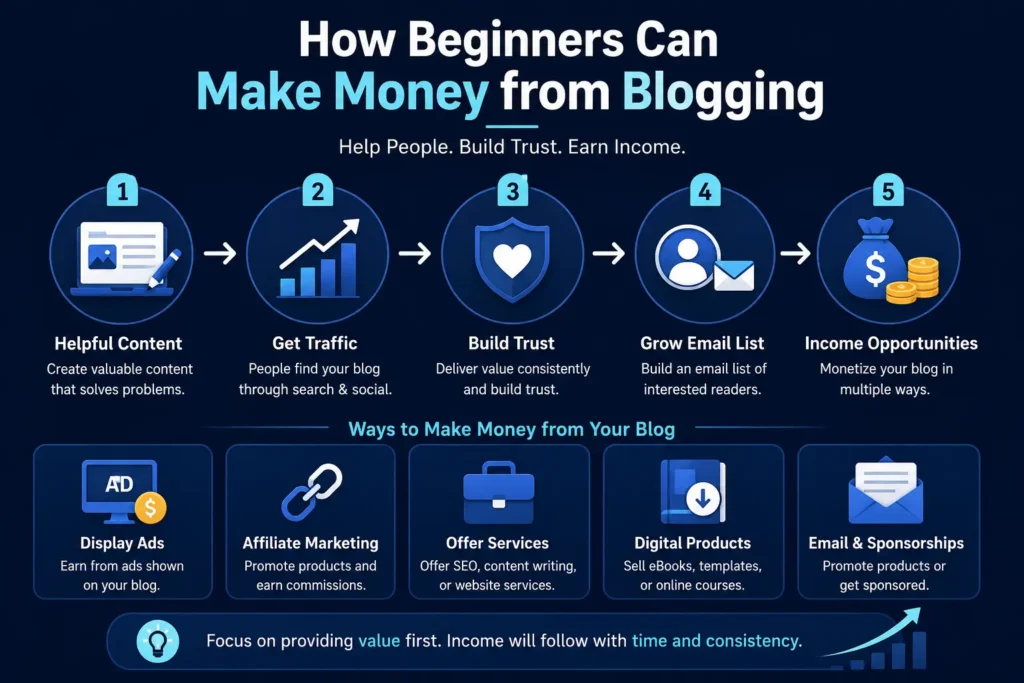
Here are some common ways bloggers can earn money:
- Ads: You can show ads on your blog when you start getting traffic.
- Affiliate marketing: You can recommend useful tools, hosting, themes, or products and earn a commission if someone buys through your link.
- Services: You can offer services like content writing, WordPress setup, SEO help, or website creation.
- Digital products: Later, you can sell checklists, templates, guides, or mini-courses.
- Email list: You can collect subscribers and build a trusted audience over time.
For beginners, the best approach is not to chase money from day one. First, build useful content and understand your audience. Jab readers ko aap par trust hota hai, monetization naturally easier ho jata hai.
A simple path can be:
Helpful content → Traffic → Trust → Email list or service → Income opportunities
So, blogging can help you earn, but it works better when you treat it like a long-term content asset, not a quick earning trick.
Common Blogging Mistakes Beginners Should Avoid
Many beginners do not fail because blogging is impossible. They struggle because they start without a clear plan.
Here are some common mistakes you should avoid:
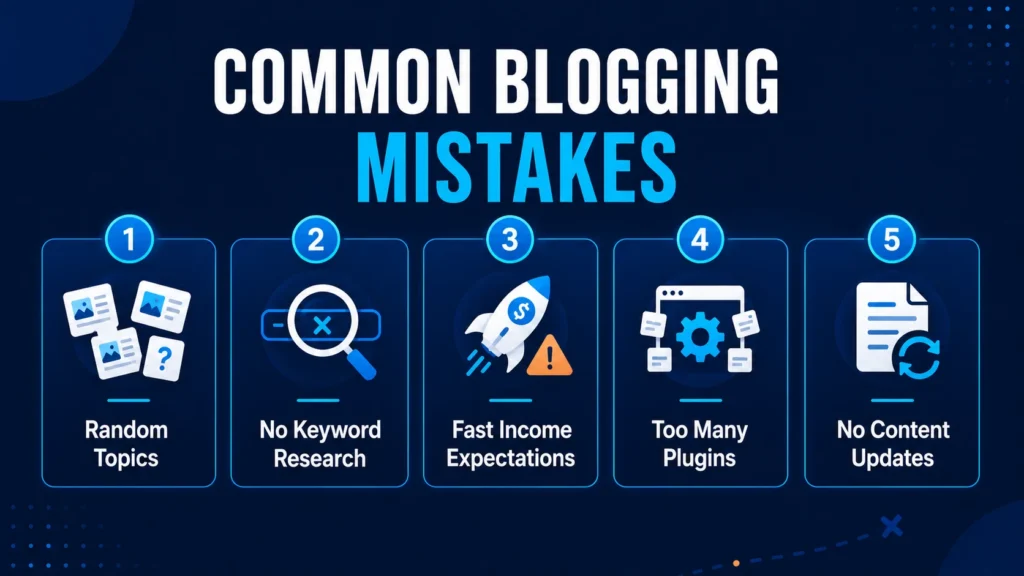
1. Choosing a niche only for money
A profitable niche is good, but if you have no interest or understanding, it becomes hard to continue.
2. Writing random topics
If every post is on a different topic, readers and search engines may not understand your blog clearly.
3. Ignoring keyword research
Writing without checking what people search for can make traffic growth difficult.
4. Copying other bloggers
Taking inspiration is okay, but copying style, examples, or content can damage trust. Your blog should have its own voice.
5. Expecting fast income
Blogging takes time. First, focus on learning, publishing useful posts, and improving your content.
6. Using too many plugins or heavy design
A slow and confusing website can push readers away. Keep your blog clean and simple.
7. Not updating old posts
Old posts should be improved with better headings, fresh examples, internal links, FAQs, and updated information.
The simple rule is: start small, avoid shortcuts, and keep improving. Blogging becomes stronger when you learn from mistakes instead of repeating them.
Simple Blogging Tips for New Bloggers
If you are starting your blogging journey, keep things simple in the beginning. You do not need a perfect website, expensive tools, or advanced SEO knowledge from day one.
Start with these simple tips:
- Choose one clear niche.
- Understand your target readers.
- Write posts that solve real problems.
- Use simple language.
- Learn basic SEO slowly.
- Create a realistic publishing schedule.
- Add internal links between related posts.
- Keep your blog design clean and fast.
- Update old posts when you learn something better.
- Do not compare your starting point with experienced bloggers.
Also, try to build your own learning system. For example, after publishing a post, check what you can improve: title, intro, headings, images, internal links, or CTA.
Blogging is not only about writing. It is a mix of learning, planning, publishing, checking, and improving.
Aapko perfect banne ka wait nahi karna hai. Start simple, learn slowly, and improve step by step.
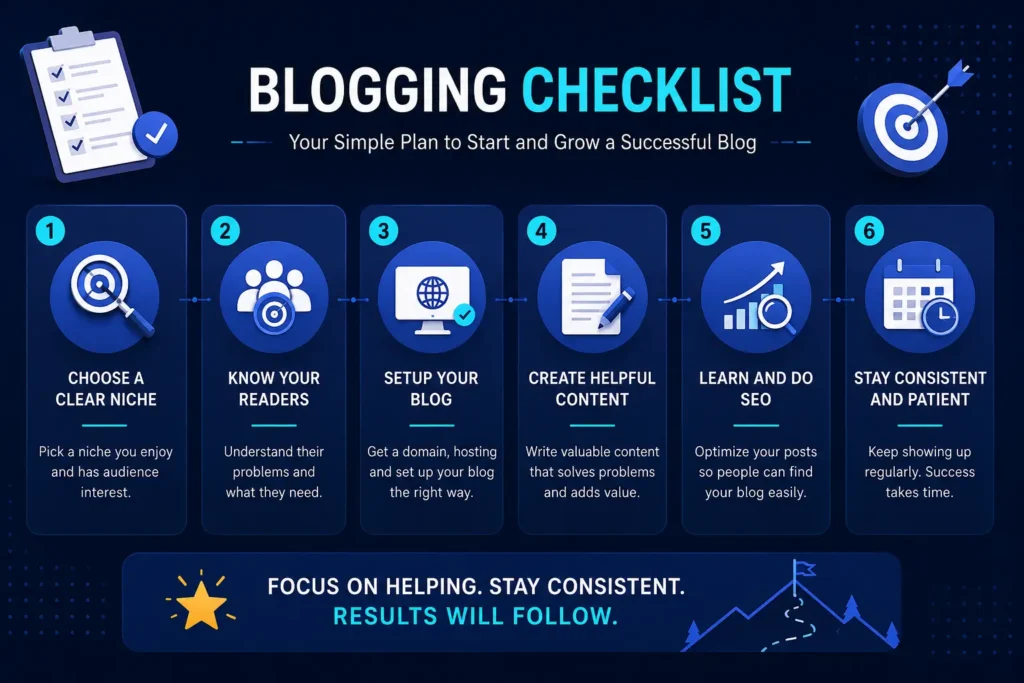
Final Thoughts
Starting a blog is not difficult, but building a useful blog needs patience, clarity, and regular improvement.
As a beginner, do not try to do everything at once. First, choose a clear niche, understand your readers, set up your blog properly, and start writing helpful posts. After that, slowly learn SEO, internal linking, content planning, and monetization.
Blogging is not a shortcut to fast income. But if you treat it like a long-term skill and content asset, it can help you build trust, audience, opportunities, and income sources in the future.
Start simple. Write for real people. Improve one step at a time.
If you want to start your first blog properly, you can begin with the basic steps from this guide and then continue learning WordPress, SEO, keyword research, and content writing step by step.
FAQs About Starting a Blog
Is blogging good for beginners?
Yes, blogging is good for beginners because it helps you learn writing, SEO, WordPress, content planning, research, and online communication. But beginners should start with a clear topic and realistic expectations.
How much money do I need to start a blog?
You can start learning blogging for free, but if you want a serious blog, you may need money for a domain name and web hosting. In the beginning, choose a simple and budget-friendly setup. Do not spend too much on premium tools before understanding the basics.
Can I start blogging without technical knowledge?
Yes, you can start blogging without advanced technical knowledge. You only need to learn basic things like using WordPress, writing posts, adding images, creating pages, and doing basic SEO. You can learn these slowly while working on your blog.
How long does it take to earn money from blogging?
There is no fixed time. Some blogs take months, and some take longer. It depends on your niche, content quality, traffic, consistency, SEO, and monetization method. Beginners should focus first on useful content, trust, and audience building.
What should I write first on my blog?
Your first blog posts should solve beginner-level problems in your niche. For example, if your blog is about blogging, you can write about niche selection, WordPress setup, SEO basics, keyword research, common mistakes, and earning methods.
If you want simple blogging, SEO, WordPress, and online earning guidance in beginner-friendly language, keep following DigitalBhai. Step by step, we will learn how to build a useful blog that can grow with trust, traffic, and future income opportunities.