
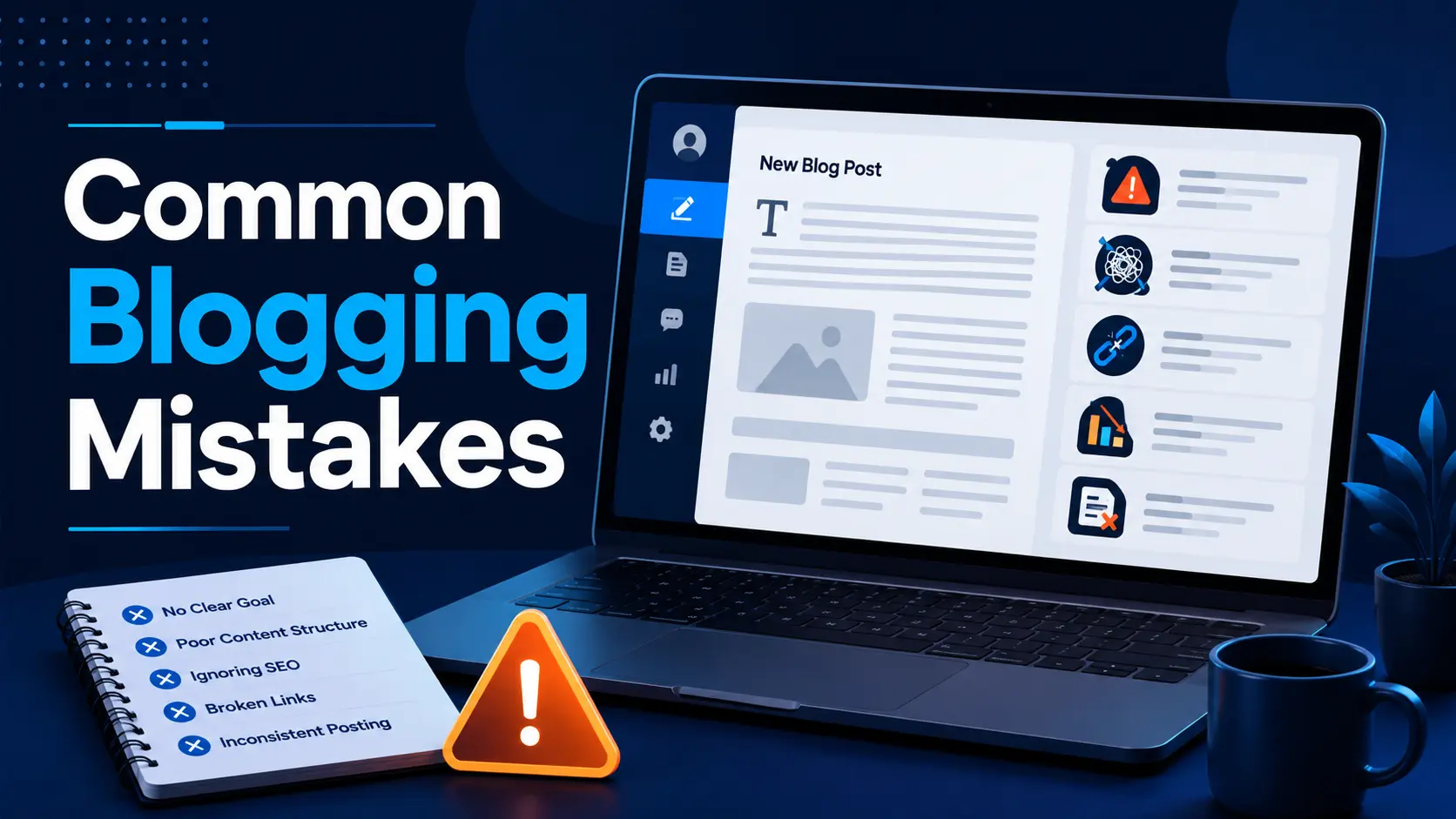
Starting a blog is exciting, but many beginners make small mistakes that slow down their growth.
In the beginning, a new blogger usually focuses on publishing posts quickly. But blogging is not only about writing more articles. It is also about writing with a clear plan, helping the right readers, using SEO carefully, and improving old content with time.
Agar aap beginner ho to tension mat lo. This stage is normal. The important thing is to understand those mistakes early, so you can avoid wasting time and build your blog in the right direction.
Most new bloggers do not fail because they cannot write. They struggle because they make small mistakes after starting the blog and keep repeating them without noticing.
In this guide, we will discuss the most common blogging mistakes beginners make after starting a blog, and how you can avoid them with simple and practical steps.
Table of Contents
Why Beginners Make Mistakes After Starting a Blog
Blogging looks simple before starting. Many beginners think, “I will write posts, publish them, and people will read them.”
But once you start, you realize blogging has many small parts. You need content planning, SEO, keyword research, internal linking, images, categories, Search Console, and consistency.
Simple tarike se samjhein to, blogging is not just writing. It is a system.
If the system is weak, growth becomes slow. For example, if you write without a plan, choose random keywords, ignore internal links, or never update old posts, your blog may struggle even if you are publishing regularly.
That is why understanding these mistakes early can save your time, energy and motivation.
Publishing Posts Without a Clear Plan
One big mistake beginners make after starting a blog is publishing posts randomly.
One day, they write about SEO. Next day, they write about tools. Then they write about a completely different topic. This makes the blog direction weak.
A blog needs a simple content plan.
You do not need a complicated strategy in the beginning. Just decide what your next 5–10 posts should be and how they are connected.
For example, if your blog is about blogging for beginners, your flow can be:
Start blogging
Choose a niche
Set up WordPress
Avoid blogging mistakes
Understand blog earning
Use useful tools
This type of flow helps readers move step by step. It also helps Google understand your website better.
If you have not planned your starting journey yet, you can first understand how to start blogging as a beginner and then build related posts around it.
Writing the Same Type of Introduction Again and Again
Many beginners use almost the same intro style in every post.
For example:
“Blogging is very important. In this post, we will learn about blogging.”
This type of intro feels boring and common.
Your first 2–3 lines should catch the reader. Start with their problem, confusion, or goal.
Instead of starting with a definition, start with something relatable:
“You published your blog post, but nobody is reading it yet. Now you are wondering what went wrong.”
This feels more human.
A strong intro tells the reader, “Yes, this post is for me.”
Not Answering the Reader’s Exact Question
Sometimes beginners write a lot, but they do not answer the main question clearly.
For example, if the topic is “blogging mistakes,” the reader wants to know:
What mistake am I making?
Why is it a problem?
How can I fix it?
If your post gives general advice but no clear solution, the reader may leave.
Every section should help the reader move forward.
Before publishing any post, ask yourself:
“After reading this section, will the reader get clarity?”
If the answer is no, improve that section.
Running Behind Rank Math Score Only
SEO plugins like Rank Math are helpful, but beginners sometimes treat the score like the final result.
If Rank Math shows 85, they feel happy. If it drops to 40, they panic. But remember one thing: Rank Math score is a guide, not a guarantee of Google ranking.
Agar aap sirf score ke liye keyword repeat karte rahoge, content unnatural ho jayega.
Use Rank Math to check basic SEO points like title, meta description, focus keyword, headings, internal links, and image alt text. But after that, read your content like a normal reader.
Ask yourself:
- Is this post actually helpful?
- Does it answer the reader’s question?
- Is the language natural?
- Are examples clear?
- Is the content easy to scan?
Good content should be clear, helpful, natural, easy to read, and SEO-friendly.
A high SEO score is useful, but reader trust is more important.

Changing Keywords Too Quickly
Another common mistake is changing focus keywords again and again.
A beginner may start with one keyword, then see another keyword, then change again. This creates confusion.
First, choose a realistic keyword. For a new blog, long-tail keywords are better than broad keywords.
For example, instead of targeting “blogging,” target “common blogging mistakes beginners make” or “mistakes new bloggers should avoid.”
If you are confused about keyword selection, learn keyword research for SEO beginners before changing keywords again and again.
Keyword research gives direction. Random keyword changes create confusion.
Adding Internal Links Randomly
Internal linking is powerful, but only when it is logical.
Some beginners add links anywhere just to increase internal links. This can feel forced.
A good internal link should help the reader.
For example, if you are explaining blogging mistakes, it is natural to link to a guide on choosing a profitable blogging niche when talking about wrong niche selection.
Similarly, if you mention SEO basics, you can link to your SEO basics for beginners guide.
The rule is simple:
Link only where it helps the reader understand the next step.
Do not use “click here” again and again. Use natural anchor text.
Ignoring Google Search Console Data
Many beginners publish posts and then only check whether the post is ranking or not.
But they ignore Google Search Console.
Search Console can show useful data like:
Which posts are getting impressions
Which keywords are showing your site
Which pages are indexed
Which pages need improvement
This data helps you understand what Google is noticing on your site.
For example, if a post is getting impressions but no clicks, maybe your title or meta description needs improvement.
If a post is not indexed, you need to check indexing status.
Tension mat lo if data is low in the beginning. A new blog takes time. But checking Search Console once in a while is a smart habit.
You can also read Google’s official guide on Google Search Console to understand how it helps track your website performance.
Forgetting Old Posts After Publishing
Many beginners publish a post and never touch it again.
But blogging does not work like that.
Old posts need updates.
You may need to improve:
Title
Meta description
Internal links
Images
Examples
FAQs
Outdated points
Readability
Sometimes, after writing new posts, you find better internal linking opportunities. Go back and connect related posts.
For example, after publishing a WordPress setup guide for beginners, you can link it from older posts about starting a blog.
This makes your site stronger over time.
Spending Too Much Time on Design
Design is important, but many beginners spend too much time changing homepage layout, colors, cards, fonts, and images.
A clean website is enough in the beginning.
Your blog should be readable, fast, mobile-friendly, and easy to navigate.
After that, focus on content.
Iska matlab ye nahi ki design ignore karo. It means design should support content, not stop content creation.
If you spend 10 days changing buttons and publish no post, blog growth will slow down.
Using Too Many Images Without Purpose
Images make a blog attractive, but every image should have a purpose.
Some beginners add too many images because they think the post will look rich. But too many images can make the post heavy and distracting.
Use images where they improve understanding.
For example:
A checklist image near conclusion
A comparison graphic in a tools post
A step-by-step infographic in a guide
A warning-style image in a mistakes post
Also, compress images before uploading. Large images can slow down your website.
Not Keeping Categories Simple
Categories help organize your blog. But beginners sometimes create too many categories too early.
This creates confusion.
For a beginner blog, 3–5 main categories are enough.
Example:
SEO
Blogging
WordPress
Digital Marketing
Later, when you publish more posts on AI tools, you can add a separate AI Tools category.
Clear categories help readers and search engines understand your blog structure.
Publishing and Not Promoting the Post
Many beginners think that after publishing, the work is done.
But publishing is only one part.
After publishing a post, you should:
Submit or inspect URL in Search Console
Share it on social platforms if possible
Add internal links from old posts
Add the post to a relevant category
Check mobile view
Update sitemap automatically through SEO plugin
You don’t need to do heavy promotion in the beginning. But basic sharing and internal linking should not be ignored.
Expecting Fast Results From a New Blog
This is one of the most emotional blogging mistakes.
A beginner publishes 5–10 posts and expects traffic quickly. When traffic does not come, motivation drops.
But blogging usually takes time. Google needs time to crawl, index, understand, and trust a new website.
Your early goal should not be “earning fast.” Your early goal should be:
- Build useful content
- Improve writing
- Learn basic SEO
- Create internal links
- Understand Search Console
- Update old posts
- Stay consistent
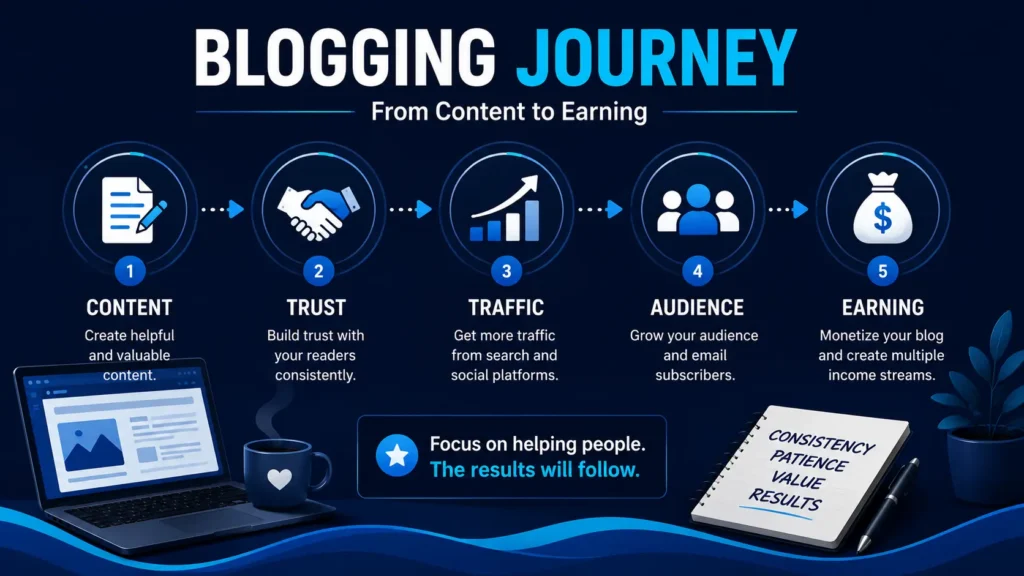
Traffic comes slowly when your content becomes useful and trustworthy. Trust grows when readers feel that your blog is helping them. Income opportunities come later, when you have content, trust, audience, and some traffic.
So the real blogging journey is:
Useful Content → Trust → Traffic → Audience → Earning
Do not judge your blog too early. First, build the foundation.
Practical Tips to Avoid These Blogging Mistakes
Start with a small content plan. Don’t publish random topics without connection.
Write for the reader first and SEO second. Use keywords naturally, but never force them.
Keep your website design clean and simple. Don’t change it every day.
Use internal links where they are helpful. Connect related posts naturally.
Check Search Console, but don’t panic over every small issue.
Most importantly, give your blog time. Blogging is a long-term project, not a one-week experiment.
FAQs
Need Help Avoiding Blogging Mistakes?
If you are a beginner and feel confused about your blog topic, WordPress setup, SEO, internal links, or content plan, don’t worry. Most new bloggers face the same confusion.
Start by fixing one mistake at a time. Keep your blog simple, write helpful content, and improve slowly.
If you need beginner-friendly guidance, you can contact DigitalBhai for simple help with blogging, WordPress, SEO, and content improvement.
Conclusion
Making mistakes after starting a blog is normal. The goal is not to be perfect from day one. The goal is to notice mistakes early and improve step by step.
If you are a beginner, focus on clarity, planning, helpful content, basic SEO, internal linking, and consistency.
Avoid running only behind SEO scores, design changes, or quick results. Build your blog like a long-term asset.
Remember, blogging growth happens slowly:
Useful Content → Trust → Traffic → Audience → Earning
Now tell me in the comments: which blogging mistake do you think beginners make the most after starting their blog?
If you want more beginner-friendly guides, you can follow DigitalBhai and bookmark this post. In the next post, we will understand how bloggers make money and what income methods beginners should know first.